Enabling organizations to realize more value from their data.
FME UX Redesign: Transformation and Growth
When I joined Safe Software as the first design hire for the desktop product, FME—a leading data integration platform used by governments, utilities, telecom, and transportation companies—was expanding into the enterprise market. My role was to lead the UX redesign for FME's desktop and web applications, aiming to make them more intuitive and aligned with enterprise users’ needs.
Project
As the lead designer, I wore many hats during this project. I drove the design vision, aligning internal stakeholders, customers, and strategic partners on a shared product vision. This involved managing a diverse team of designers, collaborating closely with executives to ensure that the design aligned with business goals, and working with other departments and external contractors to see the project through. The new design is fully implemented and available in 24.0 release.
- Design Leadership
- Product Vision
- Cross-Functional Collaboration
- UX/UI Design
- Figma
- Dovetail
- Jira
Challenge
Inconsistent Experience and a Steep Learning Curve
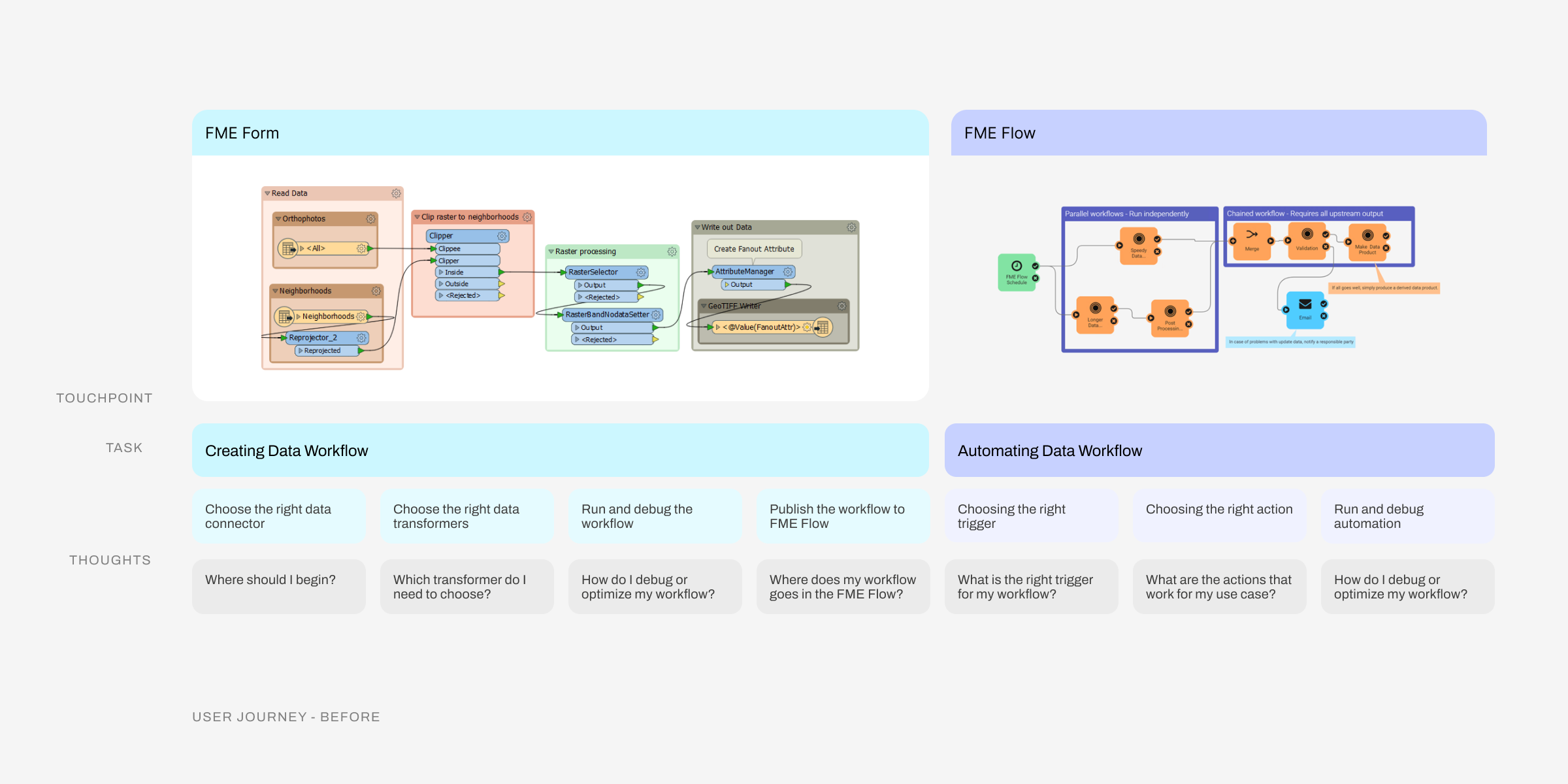
FME's powerful features were spread across desktop and web apps that behaved and looked entirely different, causing a fragmented user experience. This inconsistency, along with a steep learning curve, was a major barrier to enterprise adoption. Users struggled with learning the tools, switching between apps, and dealing with a lack of standardization across the platform. Compounding these issues, the desktop app had been around for 20 years, making any proposed changes feel risky to both users and internal teams.
Solution
A Cohesive, User-Centered Redesign
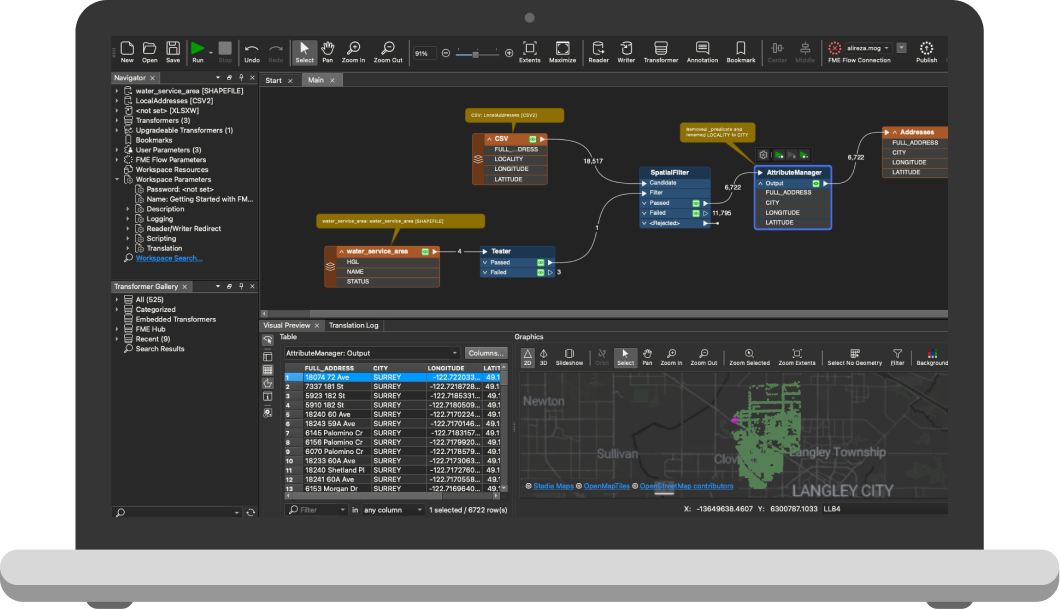
I led a team of six designers in a full UX redesign of both the desktop and web applications, with the aim of making the platform more consistent and intuitive. We developed a new visual design language, icon system, and no-code interface for the desktop product. One of my key contributions was creating a unified design system that ensured consistency across the platform, solving many of the usability challenges FME users faced.
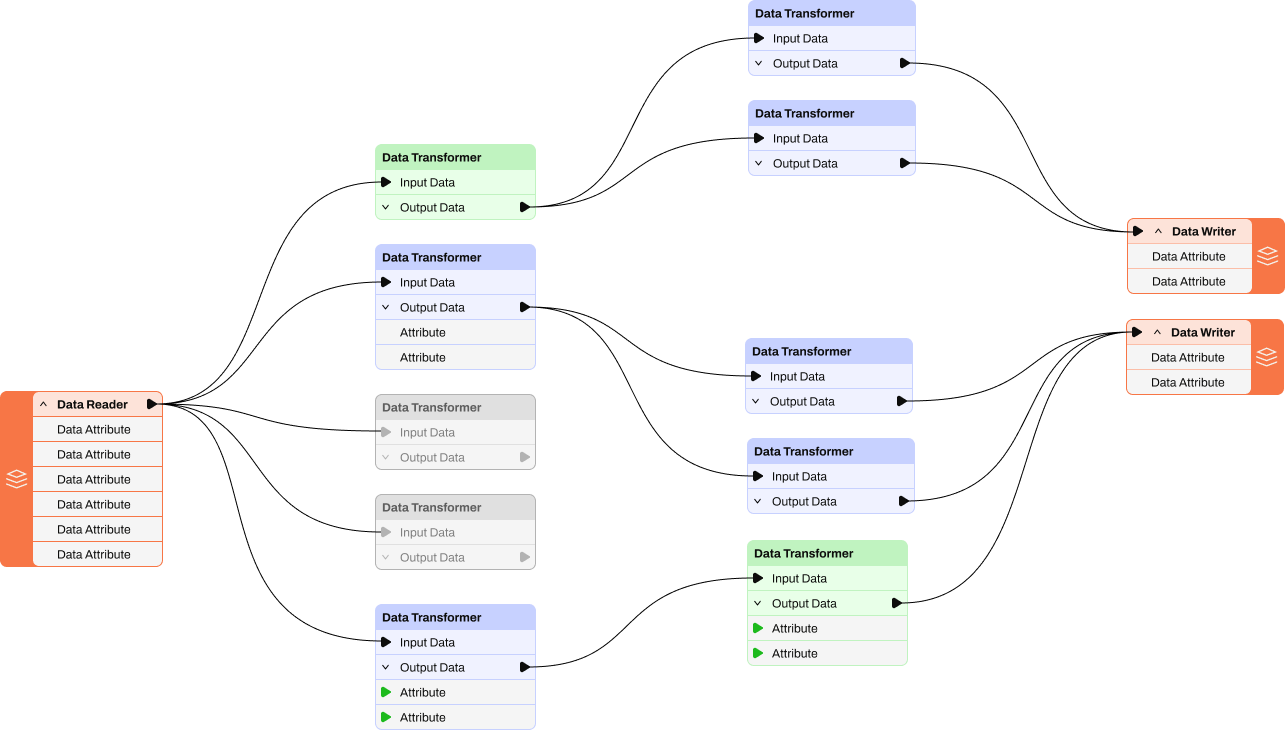
Our approach prioritized maintaining continuity with the existing design to ease the transition for long-time users, while also introducing a clean, modern interface that improved organization and reduced complexity. The no-code interface allowed users to manage complex data workflows more easily, aligning with FME’s enterprise expansion goals.
Key Results
Simplified UX and Significant Business Impact
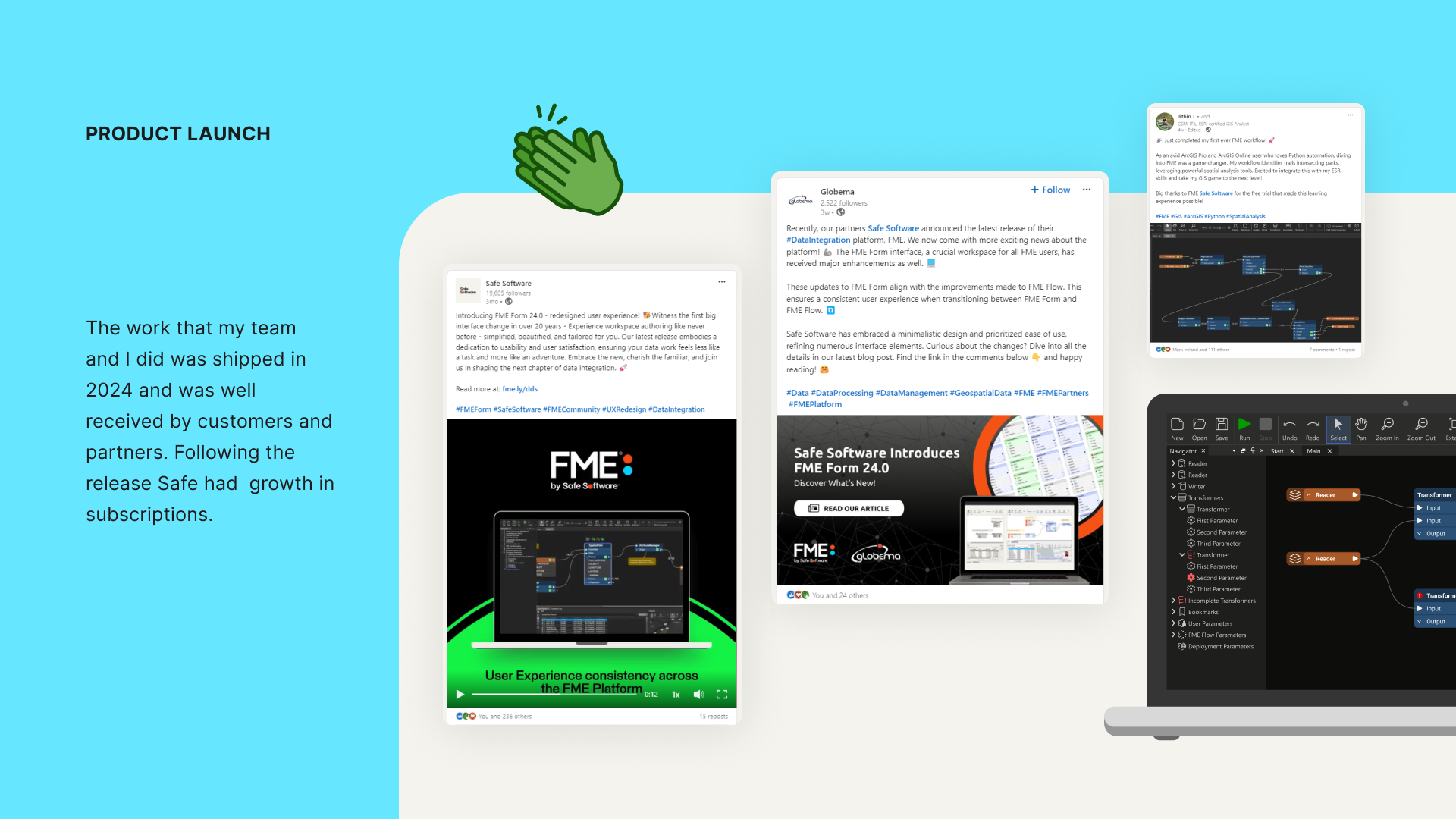
The redesign was launched in 2024, marking the first major update to FME’s interface in many years. The response from both customers and partners was overwhelmingly positive, and the redesign played a pivotal role in Safe Software achieving growth in subscriptions.
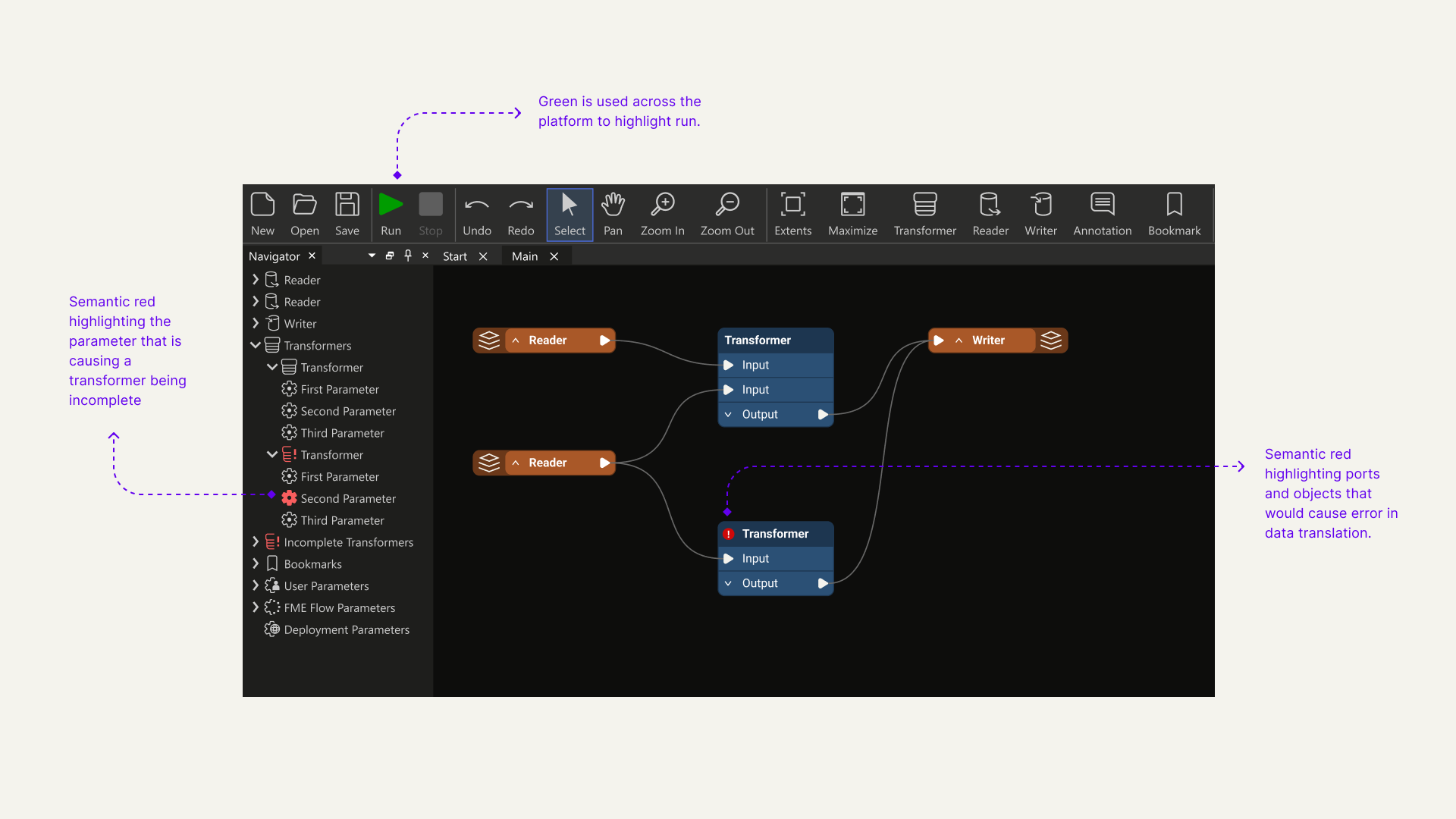
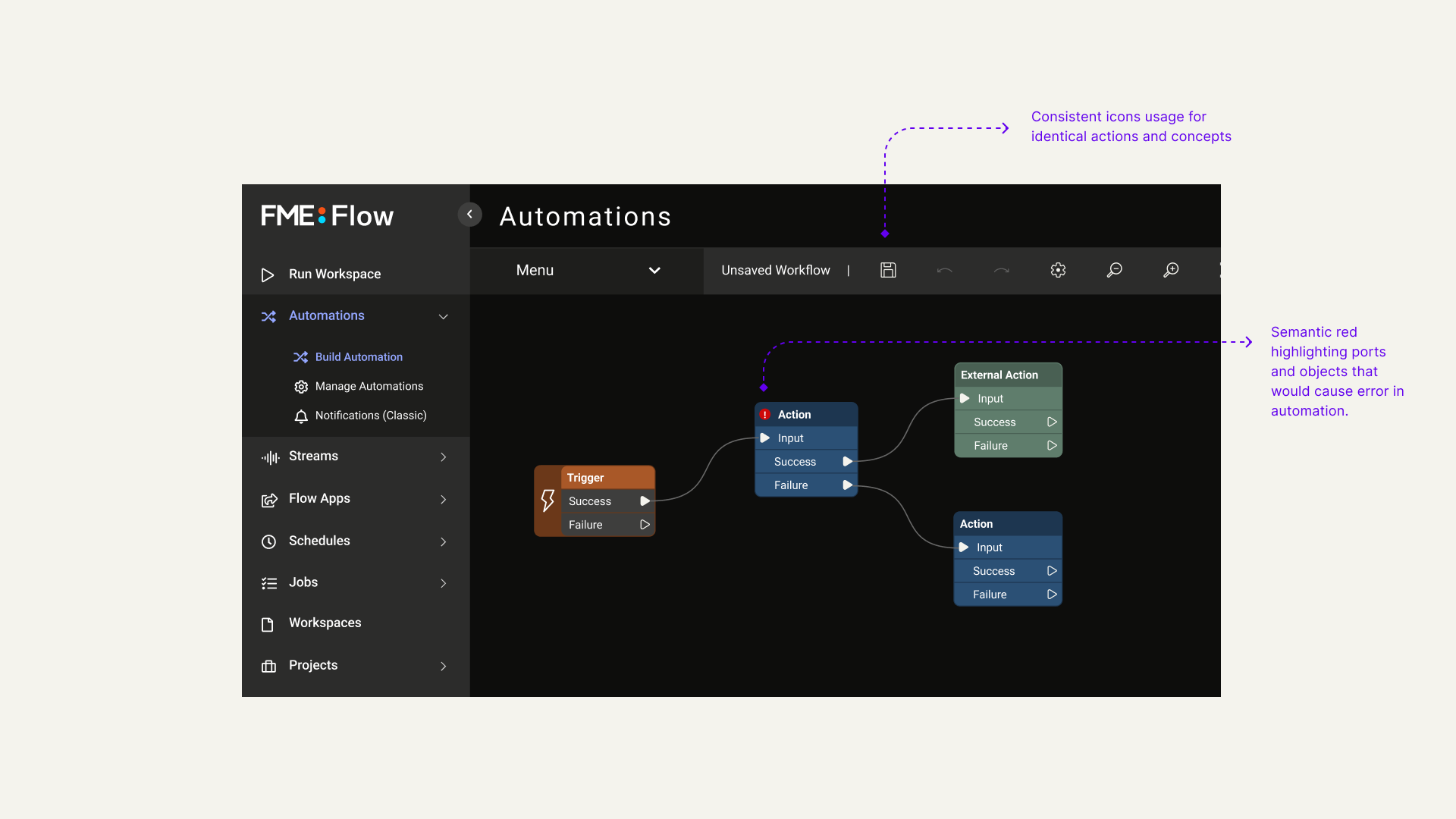
Key accomplishments of the project included:
Streamlined the user journey by unifying the design of the desktop and web apps, creating a more seamless experience.
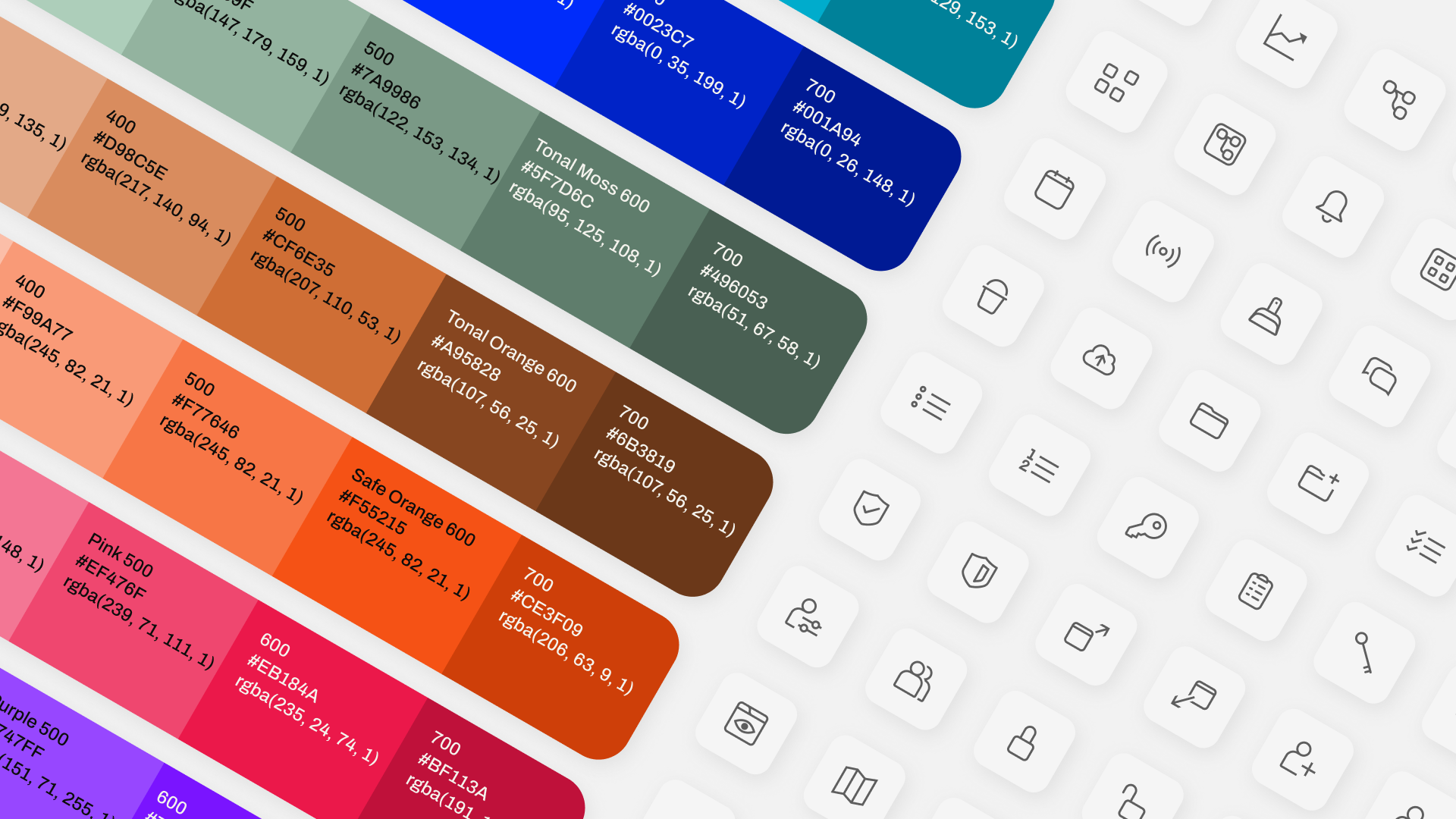
Reduced the learning curve by introducing a consistent color and icon system that improved usability and allowed users to navigate the platform with greater ease.
Strengthened the FME brand through a cohesive design system that spanned both products, aligning with the company’s rebranding initiative.
Lessons Learned
Building Alignment and Managing Change
This project taught me invaluable lessons about leadership, design, and change management. I learned how to build alignment across a large organization, ensuring that key stakeholders—from executives to end-users—were involved at the right time. I also learned the importance of setting clear expectations and being transparent throughout the design process, especially when dealing with long-standing product features that users were attached to.
Acknowledgment
This project wouldn’t be possible without the support of Safe’s leadership team and many individuals who contributed to this project directly by being part of the product team and indirectly by providing feedback. Thank you all!
Thanks for checking out this case study. Time for another?
SAP Search to Insight
I designed and shipped an AI-powered mobile product that earned 4.8 rating on the app store, empowering decision-makers with self-service analytics.
Transforming Smart Home Interactions at Samsung
I co-invented a novel user interaction aimed at enhancing user safety when interacting with smart devices.
LinkedIn Blueprint
Leveraging LinkedIn’s networking strength to support blue-collar workers transition into knowledge industries.